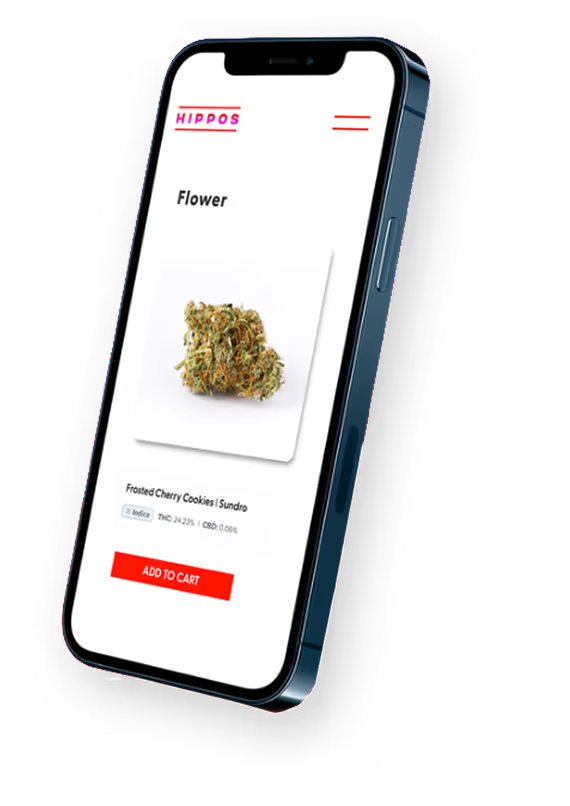


A closer look at cannabis flower can reveal a surprising amount of detail: orange hairs curling between the leaves, shades of green and purple, and a fine coating that sparkles under the light. Some buds look like they rolled through a sugar bowl, while others have a subtler shimmer. What creates that difference, and does a frostier appearance say anything about the flower inside the jar?
Much of that sparkle comes from trichomes, tiny structures involved in producing and storing the resin that gives cannabis many of its familiar characteristics. Their connection to cannabinoids and aromatic compounds makes them especially interesting to flower fans. Still, counting sparkles won’t tell the whole story about potency, flavor, or quality.
For curious cannaseurs exploring flower at Hippos, understanding trichomes adds something useful to the usual menu browsing: a better sense of what catches the eye, what deserves a question, and what the label can explain. There’s a surprisingly busy little world behind that frosty surface.
What Are Trichomes, Exactly?
Trichomes are small outgrowths on a plant’s surface. Cannabis has several types, including resin-producing glandular trichomes and nonglandular hairs. The mushroom-shaped structures often shown in close-up flower photography are stalked glandular trichomes: a stalk topped with a rounded head.
Inside that head, specialized cells produce cannabinoids and aromatic compounds, including terpenes, which collect in a resin storage cavity. Those glands help explain why flower can smell citrusy, piney, floral, or earthy.
Cannabis shares this botanical feature with other plants. Peppermint and lavender also have glandular trichomes associated with aromatic compounds. Tiny structures, plenty of personality.
Why Does One Bud Look Frostier?
A dense covering of resin glands creates that pale, sparkling appearance as light catches their surfaces. Trichome size and distribution influence the look, while lighting and the flower’s underlying color affect how obvious the coating appears.
Genetics helps explain differences between cultivars. Research has documented variations in trichome density, stalk length, and development among cannabis genotypes. Flower maturity also changes their appearance.
Handling matters after harvest, too. Trimming and other physical contact can detach or damage delicate heads. This highlights how processing can influence the finished flower’s surface.
Does More Frost Mean More THC?
Visible frost shows resin glands, but appearance alone cannot establish a THC percentage or predict someone’s experience. A photograph cannot reveal the chemical composition inside each head.
For shoppers, batch testing provides more useful cannabinoid information than sparkle alone. THC belongs alongside aroma, freshness, product format, and personal preferences when comparing options. The prettiest bud in the lineup still has to suit the person choosing it.
A Closer Look at Those Frosty Details
Under magnification, a bud’s frosty coating becomes a mix of tiny details. Some trichome heads look clear and glassy, others appear cloudy, and some have an amber tint. For flower fans who enjoy getting a closer look, that variety is part of the fascination.
Those colors can be interesting to compare, but they won’t reveal exactly how a product will feel or whether it will become a favorite. Aroma, freshness, and the information on the label give shoppers more to go on. A little curiosity makes exploring flower more fun, without turning every bud into a science project.
Is a Loupe Worth Having?
For enthusiasts who enjoy the details, a jeweler’s loupe or small digital microscope can make flower inspection absorbing. Magnification reveals individual heads and stalks that blend into a frosty coating at normal viewing distance.
Looking at several areas gives a fuller impression than focusing on one sparkling patch. A steady surface and good lighting help, and gentle handling protects the structures being examined.
A loupe is an optional curiosity tool. It cannot measure THC, certify product quality, or reconstruct a flower’s growing history. There’s still plenty to appreciate without turning the coffee table into a laboratory.
Exploring Flower at Hippos
Hippos' September Stash Box lineup featured Hippos ½ oz Deli Flower, with strains varying by location, and Sundro Bunny Runtz 0.5g pre-rolls in a five-pack. These offer two ways to connect the science with familiar products.
Loose flower leaves the bud’s surface visible for inspection. Pre-rolls keep the flower inside paper, making batch information more useful than visual inspection when comparing their contents.
For current choices, the local Hippos menus are the starting point. Shoppers can ask about cultivar aromas, harvest or packaging dates, and available batch results. September’s featured products provide examples; current selections vary.
A Closer Look at the Sparkle
Trichomes connect a bud’s appearance with the resin and aromatic compounds that make cannabis interesting. Understanding them gives curious cannaseurs better questions to bring to Hippos and more details to appreciate in a familiar cultivar. Frost may catch the eye first; learning what sits behind that sparkle makes the next flower comparison more rewarding.
Medical decisions should not be made based on advertising. Consult a physician on the benefits and risks of particular medical marijuana products. This message is not designed to increase interest in purchasing medical marijuana, nor any particular product.